Which Path Is Your Program Actually On?
Process safety performance is not static. Over time, every facility’s safety program follows a trajectory — sometimes improving, sometimes holding steady, and sometimes declining.
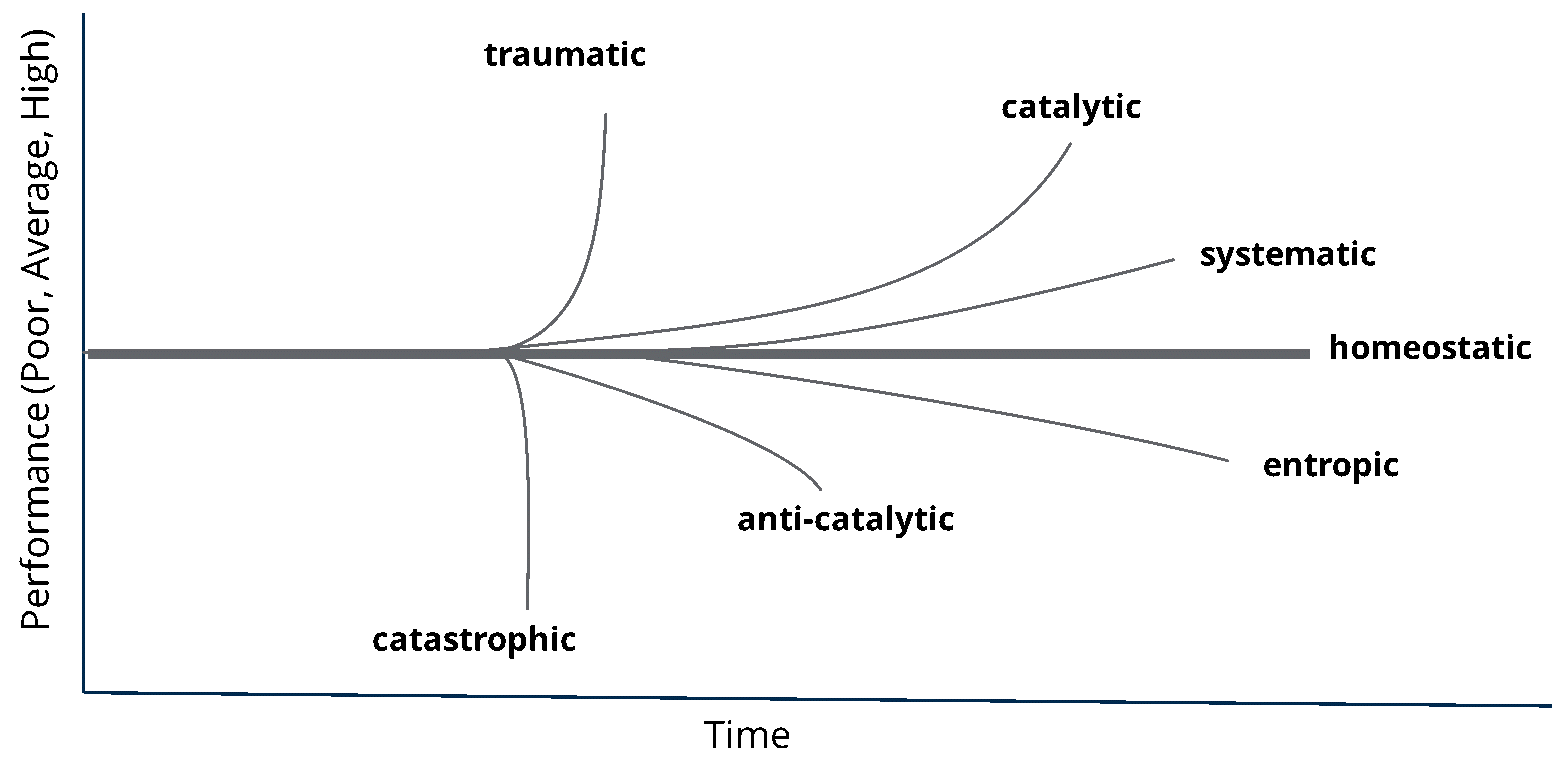
The figure below, originally presented in a Chemical Engineering Education paper, illustrates five common performance trajectories. It was referenced in the earlier post Sustaining Effective Process Safety Performance: Key Factors and Practical Approaches but not explained in detail.
The Five Performance Trajectories
Traumatic and Catastrophic — Sharp, sudden declines typically triggered by a serious process incident. Performance drops immediately, and the resulting disruption can lead to continued problems or even facility closure.
Catalytic and Anti-Catalytic — Triggering events that cause rapid improvement or rapid degradation. Common triggers include near-misses, leadership changes, mergers, financial pressures, regulatory inspections, audits, or lawsuits.
Systematic and Homeostatic — These represent continued goal-setting to maintain or gradually improve performance. Systematic paths show steady progress through disciplined systems. Homeostatic paths maintain the status quo without significant improvement or decline.
Entropic — Gradual decline over time due to complacency, lack of attention, normalization of deviance, or competing priorities.
Many organizations like to believe they are on the systematic or catalytic path. In reality, many are closer to homeostatic or slowly sliding into entropic territory until a serious event forces change or a catalyst for change appears.
Moving in the Right Direction
To shift toward systematic or catalytic performance, facilities should focus on:
Setting clear process safety goals annually
Measuring and trending performance through management review of leading and lagging metrics
Making adjustments and driving continuous improvement as needed
Key Question for Every Facility: Which path is your process safety program actually on right now — not what you hope it is, but what the data, culture, metrics, and operational discipline suggest?